




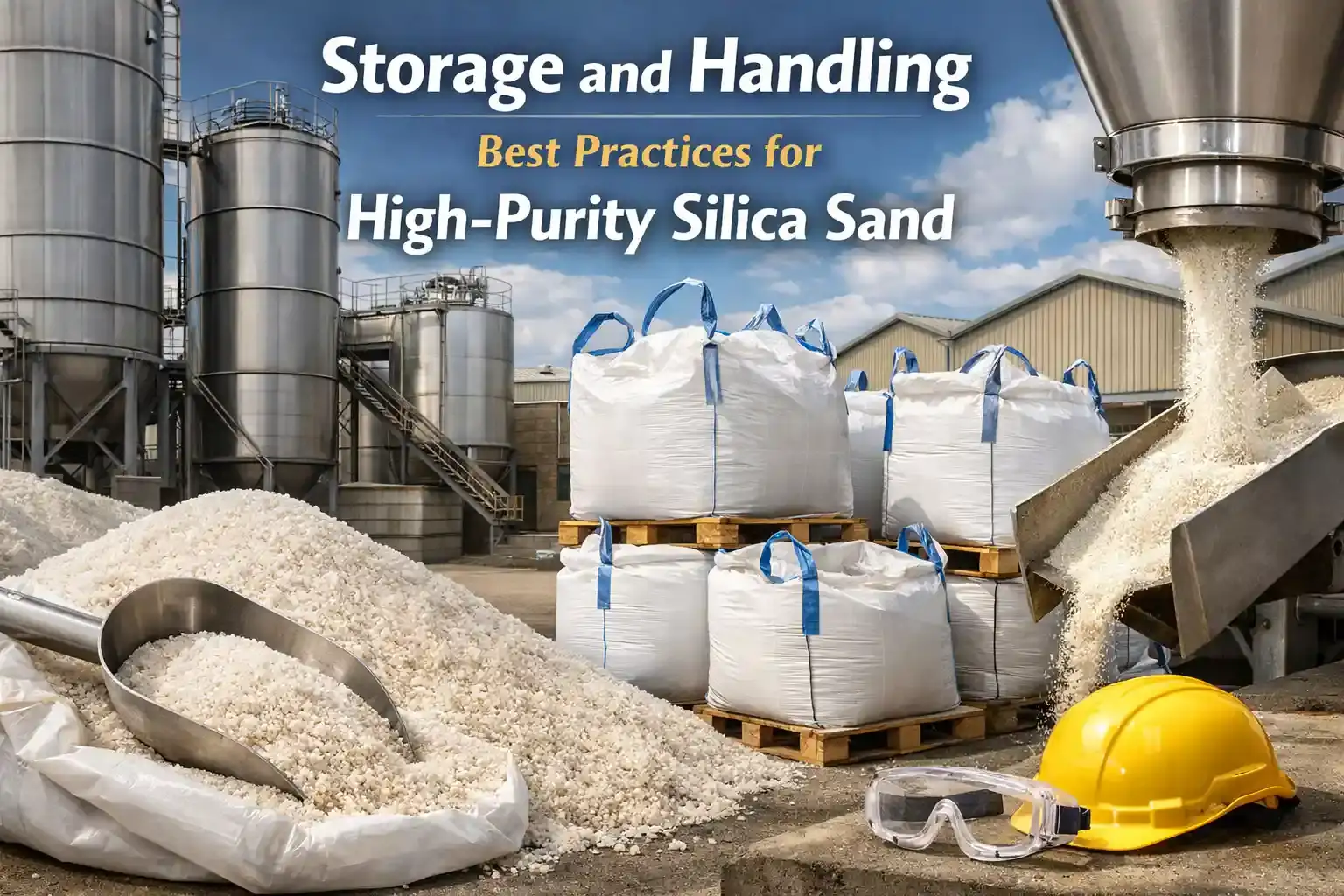
Most contamination happens during silica sand storage and handling. Not at the mine. Not during transport. A dirty shovel introduces metal particles. Or a roof hatch left open by a maintenance personnel lets in rain and debris. To prevent this from happening you need to know the risks and take preventive measures.
This blog covers what you need to know to ensure that the sand remains pure. Contamination can ruin a batch. That costs time and money. Follow these practices and you’ll protect product quality.
Contamination occurs in the sand through two mediums: from the environment and from people.
Common environmental contaminants include rust, dust, oil, moisture, organic matter, and other minerals. Even small amounts change the sand’s chemical composition. For high-purity applications like glass manufacturing, semiconductors, solar panels that is unacceptable.
Choosing the Right Storage Vessel
You have options: silos, supersacks, covered bins, or enclosed warehouses. Each has trade-offs.
• Silos are best for large volumes. They keep sand dry and enclosed. But they require regular inspection for rust and cracks.
• Supersacks (FIBCs) offer flexibility. Store them on clean pallets, away from moisture. Never reuse a bag that held other materials.
• Covered bins work for smaller quantities. The lids should be sealed tightly. Metal leaching is a source of contamination so the interior lining of the bins should be of food-grade epoxy or plastic.
Every facility has a standard set according to the quantities it is handling and location limitations.
Environmental Controls
A number of measures can minimize risk of contamination by environment. These include keeping the storage area dry and temperature-stable. Condensation usually forms when warm, humid air hits cold sand. The result is clumping and potential bacterial growth.
Another crucial measure to make area contamination free is Installation of dust-collection vents. Fitting the facility with negative-pressure systems resolves this issue by keeping airborne dirt out. If you smell diesel or oil, investigate because those fumes can settle onto sand surfaces.
Silo Maintenance and Inspection
Inspect silos weekly. This involves looking for rust, holes, or signs of pests. Make it a point to check hatches and entry ports before opening. Use compressed air or a HEPA vacuum to clean the entry ports first. Opening a dirty hatch lets debris fall directly into the sand.
Document each inspection in a log. This builds a record. It also helps in diagnosing recurring issues.
High-Purity Sand Handling Best Practices
The best prevention measure related to handling is to assign tools exclusively reserved for high-purity sand. Use separate shovels, scoops, and buckets that are color-coded. For example, yellow handles mean “high purity only.” Never use those tools for regular sand or other materials.
Transfer sand using enclosed conveyors or pneumatic systems. Open drop points invite contamination. If you must use open transfer, minimize drop height and cover the area.
Personnel discipline matters. The staff should have the correct gear and clothing to prevent contamination by touching. This gear should include hair nets, disposable gloves, clean boots, and lint-free coveralls. Do not wear clothing from outside that may carry dust or fibers. Wash hands before handling bags.
Preventing Cross-Contamination
Cross-contamination happens silently. A forklift tire picks up dirt from one area and tracks it to the sand storage zone. A pallet used for chemicals gets reused for sand.
Set up physical barriers. Segregate receiving areas from general traffic. Designate clean zones. Mark them with floor tape or signs. Everyone must respect those boundaries.
Moisture Management
Moisture is a silent contaminant that usually gets ignored. Prescence of moisture causes clumping, and promotes mold growth. This type of contamination changes particle size distribution of the sand inventory.
Your safeguard against moisture contamination includes several measures.
First is storing sand in sealed bags or covered hoppers. Never leave excess sand uncovered overnight. At the end of each shift, close all containers.
How to Know Moisture Level of Environment is High?
This is known by doing a simple hand test: squeeze a handful of sand. If it clumps, moisture levels are too high.
Follow these steps every time. They become habit.
Receiving checklist:
1. Inspect the delivery truck and check for cleanliness.
2. Take a sample from the load. Do not forget to label it with lot number and date.
3. Verify paperwork matches product specifications.
4. Record the lot number in the receiving log.
Daily cleaning routine:
1. Sweep floors around storage areas. Do not use brooms that shed fibers. Use industrial vacuums.
2. Wipe down conveyor skirts and transfer points.
3. Inspect seals on silo hatches and bin lids.
Emergency spill response:
1. Contain the spill immediately. Use barriers or absorbent materials.
2. Do not wash sand down drains. It can clog pipes and contaminate wastewater.
3. Use a dedicated HEPA vacuum to collect spilled sand.
4. Tag the recovered material for re-inspection.
Auditing and Continuous Improvement
Keep a simple contamination log. Note the date, the observation, and the corrective action taken. This helps identify patterns. For example, if moisture appears each week in the same silo, you may have a leak.
Perform monthly “purity patrols.” Walk through the storage and handling areas with a mentor. Look for potential risks: cracked flooring, dusty ventilation grilles, worn seals. Fix them before they cause a problem.
Common Pitfalls
Avoid these mistakes. They waste time and materials.
• Using dirty pallets. Wood pallets absorb moisture and harbor debris. Use plastic or treated pallets.
• Storing sand near grinding or welding areas. Metal particles travel through the air.
• Skipping protective covers on silo hatches during rain. Water enters, and the sand becomes unusable.
• Reusing bags or containers that held other products. Residual contamination transfers.
• Ignoring small dust accumulations. They become larger problems.
Stay alert. Report issues early. Do not assume someone else will handle it.
You now have a practical framework. Clean storage plus careful handling equals consistent quality. Every batch depends on your attention.
Ask questions when you are unsure. Report any dust, moisture, or unusual sand appearance. Your facility has procedures for a reason. Follow them.
Silica sand storage and high purity sand handling are your responsibilities. Handle them right. The product leaves your hands and goes to the customer. Make sure it is pure.
Modern microchips have to comply with strict quality standards for global compliance. Every funct
READ FULLMore spec sheets state that it's high purity than actually prove it. You'll find ten different pu
READ FULLFor a single lot of 300mm silicon wafers, the accumulated processing cost can reach hundreds of t
READ FULL