



Modern microchips have to comply with strict quality standards for global compliance. Every function relies on high-quality silicon wafers. Basically, it is the silica sand that plays an essential role in the production process, and any compromise to its purity will lead to severe consequences. The electronics industry looks for a higher purity level than 99.95% or 99.99% because that is what matters the most. Anything below it could risk failure in the substrate, and then the overall device could malfunction. It is a catastrophic outcome, and industries have to be precise in the purity selection of silica sand. So, if you are one of those buyers, this guide is for you.
Because the purity of quartz is what matters the most. Any compromise on it will put everything at risk of drawbacks and failures. A standard silica sand can not work here since semiconductors require a premium grade of quartz for highly sophisticated operations. This is why all the high-purity quartz used in semiconductors demands a purity level above 99.9%.
A standard silica sand’s purity level ranges from 99.0% to 99.5% or 99.7%, which is not good enough for electronics production. To meet the requirements, manufacturers need high-purity quartz silica sand. The reason is solely based on the purity level, which is between 99.5 and 99.9%. This is the compatible purity level required for semiconductor manufacturing.
Impurities like aluminum oxide, iron oxide, calcium oxide, sodium oxide, potassium oxide, and titanium oxide are very low in HPQ. These impurities are between 0.05% and 0.01%, which is why this high-grade quartz becomes a perfect choice. Another reason why standard quartz can not work for electronics is that its impurities are equal to or less than 0.5%, which is never compatible with electronics production.
The melting point is 1700°C, which is why high-quality quartz is a compatible choice for these applications. Fabrication processes need samples, and those samples require vessels and other products that can survive such extreme melting points.
High-purity quartz can resist reactive halogens, fluorinated gases, hydrofluoric acid, and hot phosphoric acid. It can also resist nitric acid, sulfuric acid, chlorides, sulfates, industrial salts, and caustic soda. Due to this chemical resistance, it prevents risks of outgassing, shedding particles, and warping. Thus, semiconductor production requires high-purity quartz that can withstand extreme temperatures and chemical impacts.
If the impurities are higher than the allowed limit, electronics will have to compromise in many ways. The quality of the product, functions, and everything will be compromised just because of choosing quartz equipment with high impurities.
There will be current leakage, dielectric breakdown, and silicon wafer structural irregularity. Besides, solder joints will become prone to voids and cracking under mild pressure. The thermal conductivity and dissipation of ceramic substrates will drop because of higher impurities in quartz. Components will face overheating issues and fatal failures. These massive defects will lead to massive financial and goodwill damage for any electronics manufacturer.
There has to be only an ultra-fine grade of silica sand for the production of high-purity quartz. The mesh size has to be between 150 and 200 mesh, and above. In other words, the grain size of silica sand should range from 0.100 mm to smaller sizes. For quartz production in the semiconductor industry, manufacturers need the purest and most expensive grade of industrial silica sand. It must be extremely fine with low permeability, which means its purity level must be 99.8%.
Here is more for you to know why ultra-low iron quartz sand is essential for the production of semiconductor wafers.
Now, you are about to read the core of this blog, where you will find information about the applications of high-purity quartz. The following are all the main applications that take place in the semiconductor industry.
Before you read that, here is a guide on selecting silica sand mesh size for different industrial applications.
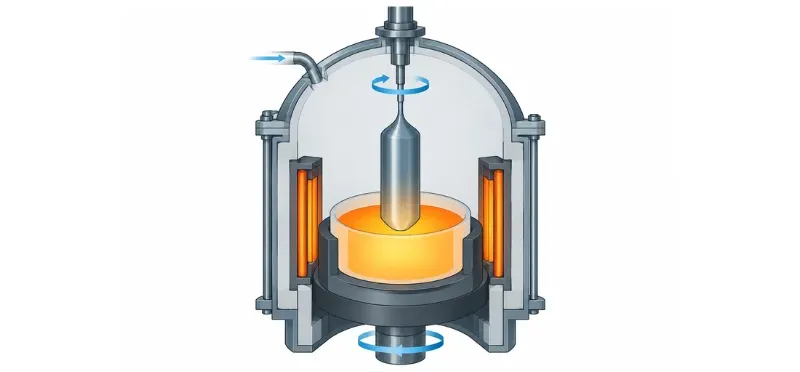
This process is like the foundation of all electronics production. Until this process takes place, nothing can be done in the entire electronics industry. Here is how it goes. Keep in mind that this process heavily relies on quartz crucibles, which shows how essential the purity of silica sand is for it.
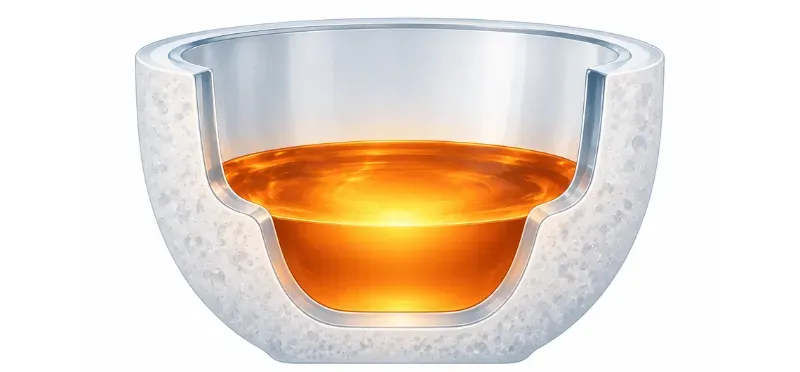
The reason this process relies on high-purity quartz crucibles is that they have an extremely pure inner layer and high thermal stability in the outer layer. During the heating process, there is no risk of contamination or thermal-pressure damage.
Quartz tubes are also compatible with furnaces where sample processing is done. These samples are silicon wafers inside quartz tubes. This is why they are called quartz tube furnaces. They provide a vacuum and an isolated environment inside the tube for best results. They provide perfect support for use in oxidation furnaces during semiconductor fabrication.
Quartz tubes are highly pristine and high-temperature-compatible tubes. They can easily resist thermal shocks and provide a controlled atmosphere against any interference from external elements. These quartz tubes contain reactant gases for chemical vapor deposition. The process goes smoothly because these tubes prevent the risk of contamination, leakage, and collapse.
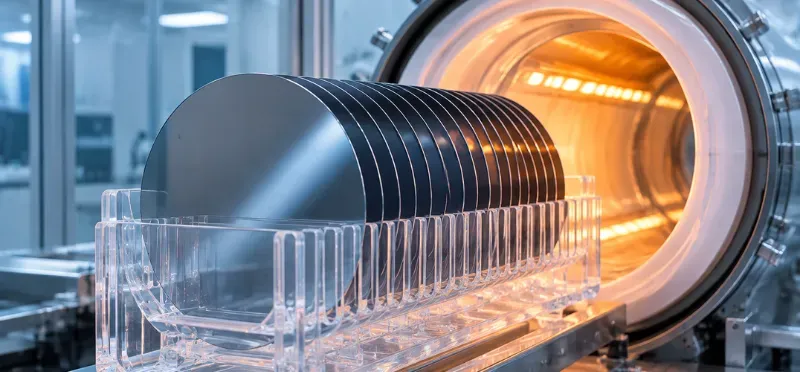
Then the third application of silica sand quartz is this one. They are quartz boats, etching rings, and wafer carriers that provide a safe and uninterrupted environment for the movement of electronics. They can withstand temperatures over 1000 degrees C, and the chemical vapor deposition process becomes safe.
This quartz glass guides reactive gases like CF4, argon, SF6, and chlorine safely at high temperatures. It also helps in the substrate material removal process inside the tube through ion bombardment.
Quartz boats carry silicon wafers safely in an isolated environment where there is no risk of particle contamination. It is the safest, most isolated, and temperature-resistant glass structure for silicon wafers and similar components.
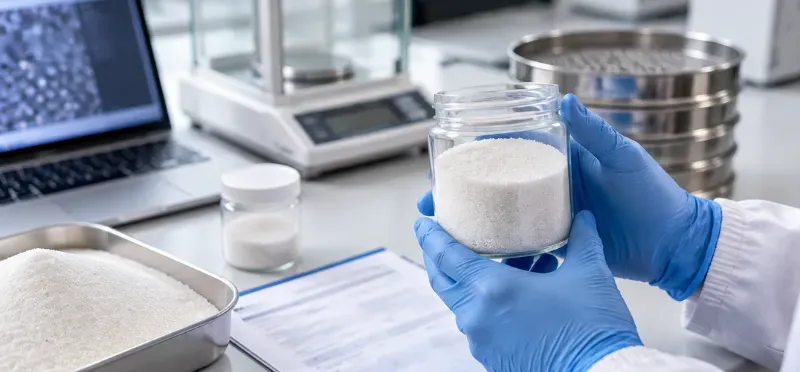
High-purity quartz uses in semiconductors are numerous, and it requires silica sand for the production of quartz equipment. Since there are limited sources, manufacturers could face bottleneck issues in the supply chain processes. USA, Russia, Norway, China, Australia, and Brazil are some of the top countries that have massive supply. The global bottlenecks are increasing because of political tensions in some regions, and semiconductor industries need consistent supply from their suppliers. Not only that, but new buyers also face risks regarding supplier quality and supply chain challenges. They have to verify purity grade and certification. They need suppliers, storage guidance, and reliable service for repetitive orders. Amid all these global challenges and supply chain constraints, companies need a supplier like Total Silica LLC.
The purity of quartz must be at least 99.998% or higher, such as 99.999% SiO2. The trace elements or impurities have to be extremely low, like 0.002% or below. Those impurities are aluminum oxide, iron oxide, calcium oxide, sodium oxide, potassium oxide, and titanium oxide. Make sure those impurities are at least below 0.01%.
Standard sand does not have the purity level required for semiconductor production. Also, it melts at inconsistent temperatures and contains conductive impurities like aluminum, iron, and sodium oxides. These impurities destroy the delicate electrical properties of the silicon wafer. Also, there is a risk of current leakage, dielectric breakdown, silicon wafer structural irregularity, and solder joints cracking under mild pressure. There will be overheating issues in the substrates along with fatal electronic failures.
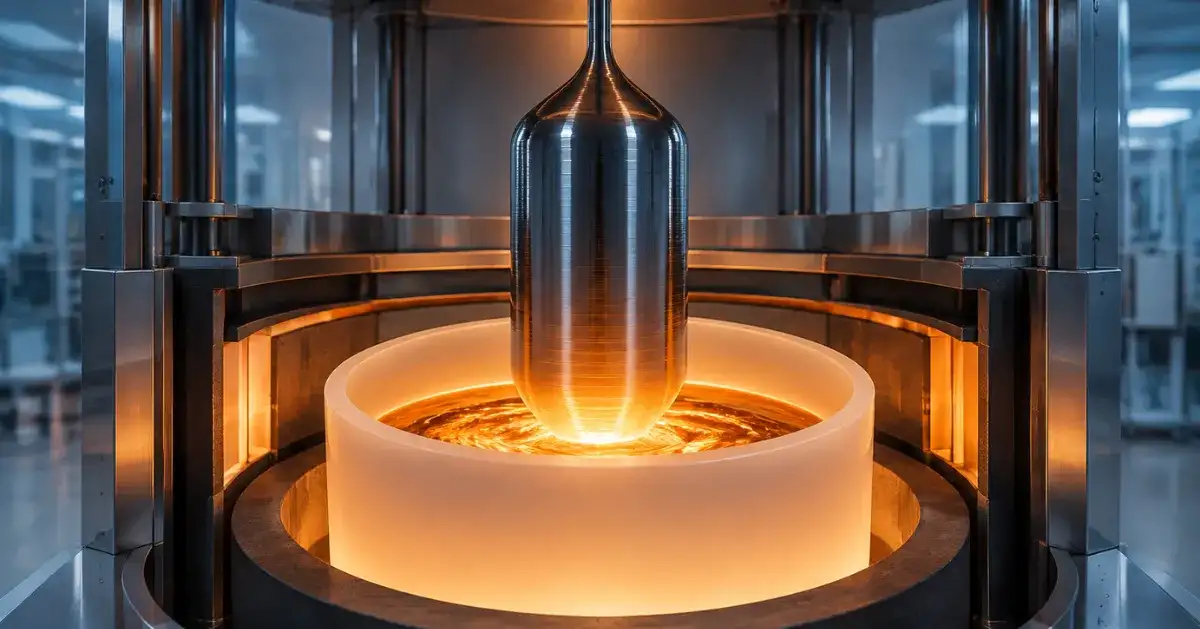
It is a jar-like crucible that is made of high-purity quartz. This consumable, high-temperature-resistant semiconductor quartz vessel holds molten raw polysilicon. Highly pure electronic-grade polycrystalline silicon is placed inside quartz crucibles for the heating process. It holds and melts polycrystalline silicon during the production of monocrystalline silicon ingots. Its ultra-purity and high temperature resistance of 1425 degrees C make it compatible for this application.
Those who want premium silica sand for semiconductor manufacturing should do the following. Contact Total Silica LLC, which is a wholesale manufacturer of high-purity silica sand. Total Silica LLC has a high purity level, which is above 99.95%. There will be extremely low impurities for structural support and consistent overall quality. The purity level will be strictly compatible with semiconductor production. Traceability will be simple, and we will also provide samples for quality assurance.
Contact Total Silica LLC now and place your bulk orders!
Modern microchips have to comply with strict quality standards for global compliance. Every funct
READ FULLMore spec sheets state that it's high purity than actually prove it. You'll find ten different pu
READ FULLFor a single lot of 300mm silicon wafers, the accumulated processing cost can reach hundreds of t
READ FULL